
 The Real Difference Between Organic and Powder-Based Boba
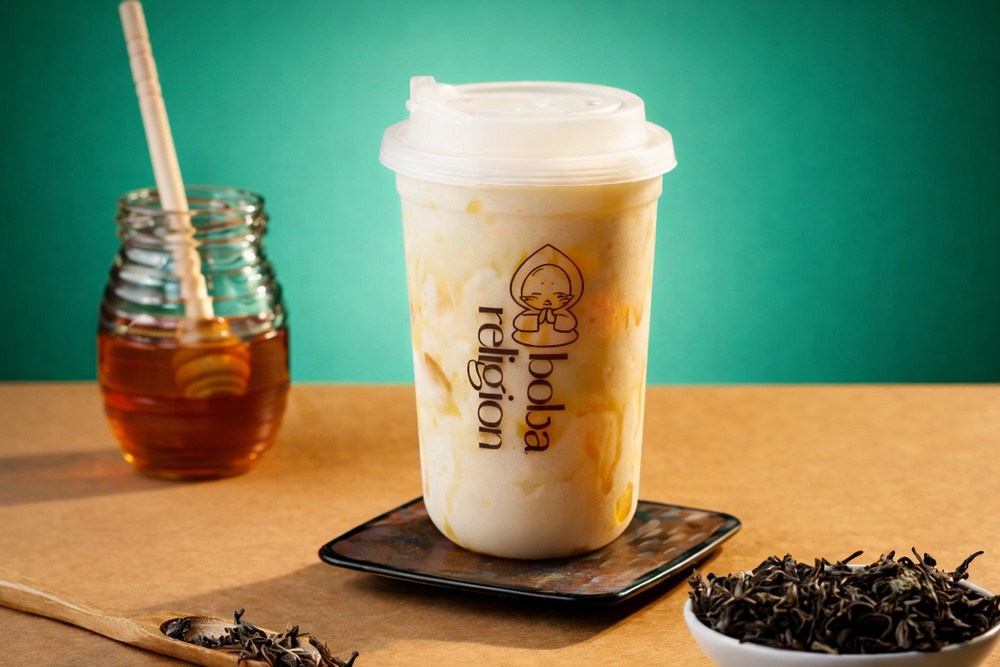
Organic boba tea is made from real brewed tea leaves and whole ingredients instead of pre-mixed flavor powders and syrups. Boba Religion brews organic boba tea this way in Clairemont Mesa, San Diego, a few minutes from Kearny Mesa. Every cup starts with loose-leaf tea, organic honey, and stone-ground matcha rather than a scoop of powder and a pump of artificial flavor.
That single choice changes everything downstream: the taste, the sugar load, and what your body actually gets from the drink. Most shops never tell you which method they use, so here’s how to tell the difference and why it matters when you pick where to order.
What Powder-Based Boba Actually Is
A lot of the bubble tea San Diego shops pour is built for speed, not for tea. The base is a flavored powder mixed with water or a non-dairy creamer, then sweetened with high-fructose syrup. The “taro,” “matcha,” or “milk tea” flavor you taste often comes from a packet, not a leaf.
Powder mixes are cheap, shelf-stable, and consistent, which is why chains lean on them. The trade-off is that the drink carries flavoring agents, artificial colors, and a heavy dose of added sugar with very little of the real tea behind the name. If the color looks unnaturally bright, that’s usually the powder talking.
How Organic Boba Is Made Differently
Real organic boba starts with tea you can trace. At Boba Religion, the tea is sourced from Bao Loc, Vietnam, and brewed fresh rather than reconstituted from a tin. The sweetness comes from organic honey and brown sugar instead of corn syrup, and the matcha is stone-ground ceremonial grade, not a flavored mix.
This is the heart of the woman-owned, handmade approach behind the story of Boba Religion. Drinks take a little longer to make because they’re brewed and assembled by hand, but the flavor is cleaner and the ingredient list is short enough to read out loud.
How To Tell If Your Boba Shop Uses Powder
You don’t need to ask to see the back of the house. A few signs give it away fast, and they’re worth checking before you commit to a regular spot.
- Read the menu language. Words like “brewed daily,” “loose-leaf,” and “organic” point to real tea. “Mix,” “creamer,” and “flavor base” point to powder.
- Look at the color. Neon green matcha and electric purple taro are powder tells. Real matcha is a softer, earthy green.
- Ask about the milk. Shops using real tea usually offer a real oat milk base instead of powdered non-dairy creamer.
- Check the sweetness options. A shop confident in its tea lets you dial sugar down to 25% or 0% without the drink falling apart.
The Sugar Question: Powder Mixes vs. Real Tea
Sugar is where powder-based boba quietly piles up. A standard sweet bubble tea can carry 30 to 50 grams of added sugar in a single cup. The World Health Organization recommends adults cap free sugars at about 25 grams a day, so one powdered drink can blow past the daily limit before lunch.
That matters over time. The Harvard T.H. Chan School of Public Health reports that each additional daily serving of a sugary drink raises type 2 diabetes risk by roughly 25%. Real-tea boba doesn’t erase sugar, but brewing real tea and sweetening with honey gives you a base that still tastes good at 50% sweetness or lower, so you control the number instead of the powder controlling it.
Why Real Tea Tastes and Feels Different
Brewed tea brings more than flavor. Green tea and matcha are rich in catechins, a group of plant antioxidants. Research published by the National Institutes of Health identifies EGCG as the main catechin in green tea, studied for its antioxidant and metabolic effects. Powder rarely delivers those compounds in any meaningful amount.
You taste the difference too. Real tea has a slight bitterness and depth that balances the sweet, which is why a brown sugar milk tea made with brewed tea has body instead of just sugar. Order an organic boba tea online and the texture of the tapioca, the cleaner finish, and the lighter aftertaste are all the tea doing its job.
Where To Find Organic Boba in San Diego
Real-tea boba is still rare across San Diego, and most boba San Diego spots still run on powder, which is part of why people drive to find the real thing. Boba Religion sits on Clairemont Mesa Blvd, central to Clairemont, Kearny Mesa, Mira Mesa, and the Convoy District. The full lineup, from signature milk teas to matcha, lives on the organic boba tea menu, and you can customize sweetness, ice, and toppings on every drink.
If matcha is your thing, the same real-ingredient approach carries over to the lattes, which we break down in our guide to matcha in San Diego. And if you choose a cafe partly on looks, see how the space factors in over in our take on aesthetic cafes in San Diego.
Frequently Asked Questions
Does organic boba cost more than powder-based boba?
Usually a little, yes. Real loose-leaf tea, organic honey, and ceremonial matcha cost more than powder, so prices run modestly higher. Most people find the cleaner taste and lower sugar control worth the small difference.
Is organic boba actually lower in sugar?
It can be. The tea base itself has no added sugar, so you choose the sweetness level, often down to 25% or 0%. Powder mixes come pre-sweetened, which makes cutting sugar much harder.
Do you serve my neighborhood?
Boba Religion is in Clairemont Mesa and serves the surrounding Kearny Mesa, Mira Mesa, Clairemont, and Convoy areas. You can order ahead online or visit the shop directly.
How do I order a lower-sugar boba?
Ask for 25% or 50% sweetness and pick an oat milk boba option. Skip the syrup-heavy add-ons and choose tapioca or fresh toppings instead.
Ready to Get Started?
Taste what real brewed tea, organic honey, and stone-ground matcha do to a cup of boba. Boba Religion makes every drink by hand in Clairemont Mesa.
Order online or call us at 858-737-8575.